
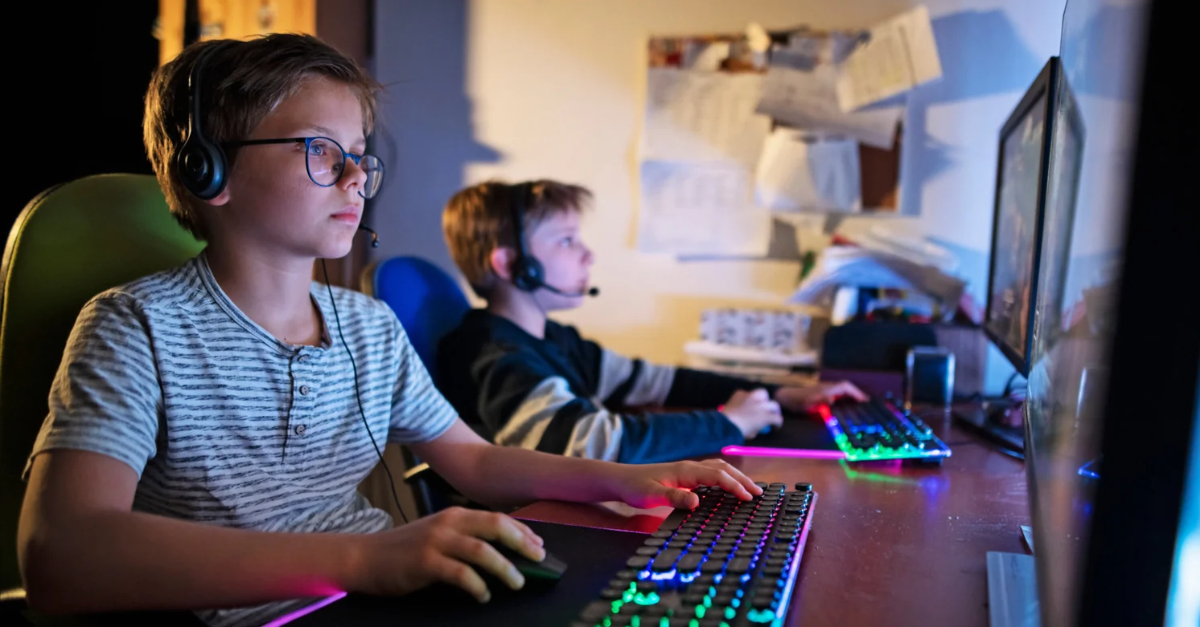
Years ago, "Player 2" usually meant a sibling sitting beside you on the couch.
Today? Player 2 could be someone across the country or even across the world.
Online gaming has become one of the most common ways children socialize. Friends meet in games, classmates play after school, and many kids build online communities that feel just as real as those in person. Most of these interactions are harmless.
But just like every place children gather, online games can also attract people looking to exploit young players.
The goal isn't to create fear around gaming. It's to help parents understand the digital spaces their children spend time in so they can guide them in navigating those spaces safely.
Because every game has a Player 2.
The question is...
Do you know who yours is?
Gaming Isn't Just Gaming Anymore
Gaming has become one of the largest social platforms for children and teens. Today, approximately 212 million Americans play video games every week, and nearly one in four players is under the age of 18. Research also estimates that 80–85% of children and teens play video games, making gaming one of the primary ways young people connect with friends and classmates.
Many popular games include:
● Voice chat
● Private messaging
● Friend requests
● Team building
● Live streaming
● User-created content
For many kids, gaming is no longer about "beating the game."
It's about hanging out.
In fact, studies show that nearly 70% of teens play online games with people they do not know in real life. While many of these interactions are harmless, they also create opportunities for children to connect with individuals whose identities cannot be verified.
That means online games function much more like social media.
Why This Matters
Gaming isn't just popular. It's a significant part of many children's daily lives.
Children ages 8–17 spend an average of about 1½ hours each day playing video games, with many using smartphones, tablets, gaming PCs, or consoles. While boys are generally more likely to play daily than girls, children of all ages are using games to socialize, communicate, and build friendships online.
One of the world's most popular games, Roblox, reports more than 380 million active monthly users globally, illustrating just how many young people are interacting with others online every day.
The more time children spend in digital spaces, the more important it becomes for parents to understand how those spaces work.
What Is Game Grooming?
Online grooming is the process of building trust with a child in order to exploit them.
Predators often don't begin with inappropriate conversations.
Instead, they begin by being exactly who a child wants them to be:
● A teammate
● Someone who gives game advice
● A generous player
● Someone who sends in-game gifts
● A funny friend
Many will pretend to be another child.
Slowly gathering information over weeks or months before ever asking for something inappropriate.
The relationship often develops in stages:
Play Together → Become Friends → Build Trust → Move Conversations Off the Game → Ask for Secrets → Request Photos or Meetings
Grooming isn't usually obvious. That's what makes it dangerous.
What Makes Gaming Different?
Unlike social media, gaming naturally creates teamwork. Children depend on teammates to succeed, and winning together builds trust quickly. Voice chat makes strangers feel familiar, and hours spent playing together can make someone feel like a real friend.
Predators understand this. They don't need to force a friendship. The game does much of the work for them.
Four Risks Parents Should Know
1. Catfishing
Many offenders pretend to be teenagers, copying the language, humor, and interests of young players. Children are naturally more likely to trust someone they believe is their own age. That trust becomes the doorway to manipulation.
Sometimes this leads to:
● Sharing personal information
● Moving conversations to Snapchat or Discord
● Sending explicit photos
● Sextortion
● Requests to meet in person
2. "Everyone Is Just a Username"
Psychologists call this deindividuation. When we only see a screen name instead of a person, it's easier to forget there's a real human behind it.
That can lead to:
● Toxic conversations
● Harassment
● Bullying
● Aggressive behavior
● Desensitization
Children may begin to accept behavior online that they would never tolerate in face-to-face interactions. Predators may take advantage of this environment, where inappropriate language and conversations can become normalized and may be less likely to raise concerns.
3. Games Collect More Information Than You Think
Many games collect information such as:
● Age
● Email address
● Location
● Device information
● Gmeplay habits
● Purchasing behavior
Some of this information may be shared with advertising partners or third-party services. Before creating an account, parents should understand what information the game collects and how it may be used.
4. Safety Features Aren't Perfect
Gaming companies continue to improve child safety tools, but no platform can guarantee complete protection. Reporting systems, moderation, and parental controls all help—but they don't replace active parenting.
Safety settings are a starting point, not the finish line.
Your Child Doesn't Need Every Feature Turned On
One of the biggest misconceptions parents have is that if a game is marketed for children, it must already be safe.
The reality is that many gaming devices and apps include a variety of features—such as voice chat, text messaging, friend requests, multiplayer matchmaking, and purchasing options—that may be enabled by default or can be easily activated.
The good news? Parents have more control than they may realize.
Most gaming platforms allow families to:
● Set age-appropriate content restrictions
● Limit who can contact their child
● Disable voice or text chat
● Restrict friend requests
● Require approval for purchases
● Set screen time limits
● Review privacy settings
● Block and report inappropriate users
These tools aren't meant to replace conversations with your child, but they can create an additional layer of protection while your family builds healthy digital habits together.
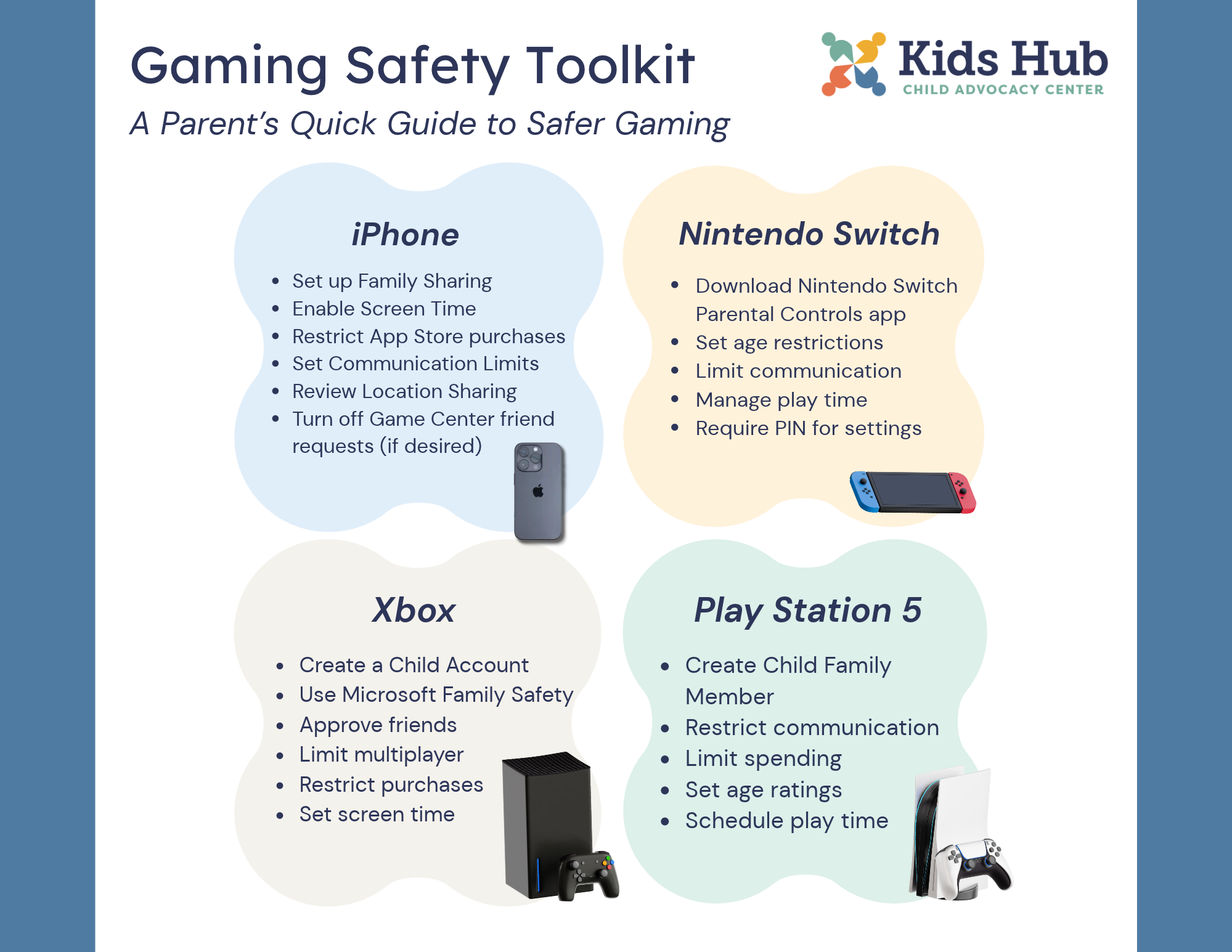
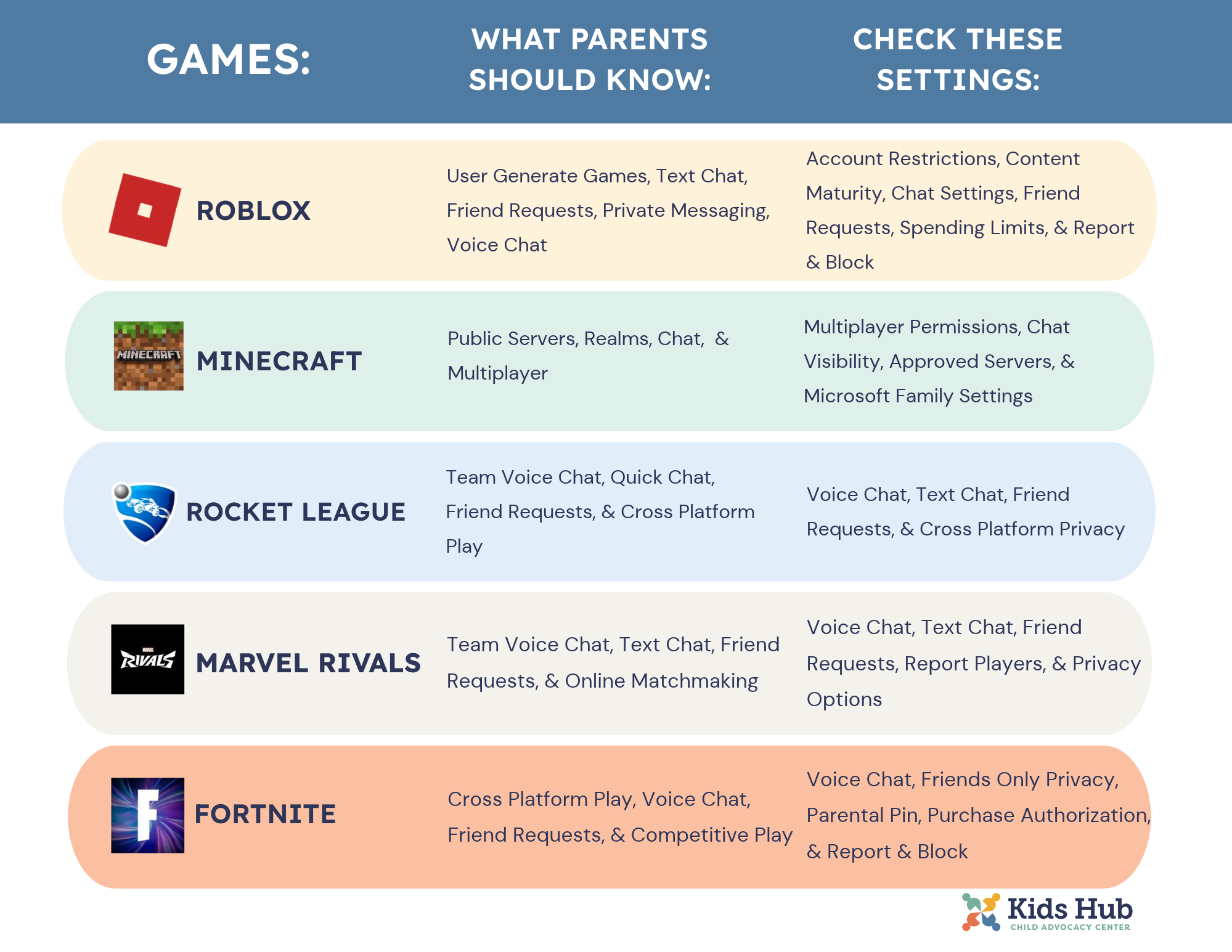
Check Out Our Parent's Quick Guide to Safer Gaming
To help families get started, we've created A Parent’s Quick Guide to Safer Gaming. This free resource highlights important safety features and parental controls available on some of today’s most popular gaming devices and games, including:
Devices
● iPhone, Nintendo Switch, Xbox, & PlayStation 5
Games
● Minecraft, Roblox, Fortnite, Rocket League, & Marvel Rivals
The guides below provide an overview of key features parents should be aware of, along with recommended settings to help manage privacy, communication, purchases, and play time.
Use these resources as a starting point for creating a safer gaming experience for your child.
What Parents Can Do Today
The good news? You don't have to become a gamer to help protect your child. Start with a few simple habits.
Show Interest in What They Play
Ask: "Show me what you're playing." Let your child teach you. Curiosity builds trust.
Know Who They’re Playing With
Ask: "Who do you usually play with?" If they don't know someone in real life, ask how they met.
Review Privacy Settings
Whenever possible:
● Disable public chat for younger children
● Limit friend requests
● Disable location sharing
● Use parental controls
● Require approval before purchases
Teach Personal Boundaries
Children should never share:
● Full Name, School, Address, Phone Number, Passwords, Photos, or Live Location
Even if "it's just my gaming friend."
Make It Safe to Speak Up
One of the best questions a parent can ask is: "Has anyone ever made you uncomfortable while gaming?" Make sure your child knows they won't lose gaming privileges simply because they told you about something concerning. You want them to come to you—not hide it.
Conversation Starters
Instead of asking: "Are you safe online?"
Try asking:
● Who's your favorite teammate?
● Have you ever played with someone you've never met?
● Has anyone asked to chat somewhere besides the game?
● Has anyone ever asked your age?
● Have you ever blocked someone?
● Do you know how to report a player?
These questions create conversations rather than interrogations.
Final Thoughts
Many people your child meets while gaming are simply looking to have fun. However, online games, like any space where children gather, can also attract individuals who intend to manipulate or exploit young players.
The goal isn't to make children afraid of gaming, but to help them become informed, confident, and responsible digital citizens.
When parents stay curious, take an interest in the games their children play, and keep conversations open, they can help their children recognize unsafe situations and feel comfortable asking for help.
Because the biggest question isn't whether your child has a Player 2.
It's whether you and your child know who Player 2 really is.
*The statistics and information referenced throughout this article were compiled from current research and reports on youth gaming, online safety, and digital behaviors. We encourage parents and professionals to explore these resources for additional information.
● Pew Research Center. Teens and Video Games Today (2024).
● Statista. Video Gaming of Children and Teens in the United States.